FUTURE OF CYBERSECURITY - CLOUD SECURITY
Hello guys pytools here back again with another artical, in this article we are going to discus about cloud security.
So first We need to understand
what is cloud ?
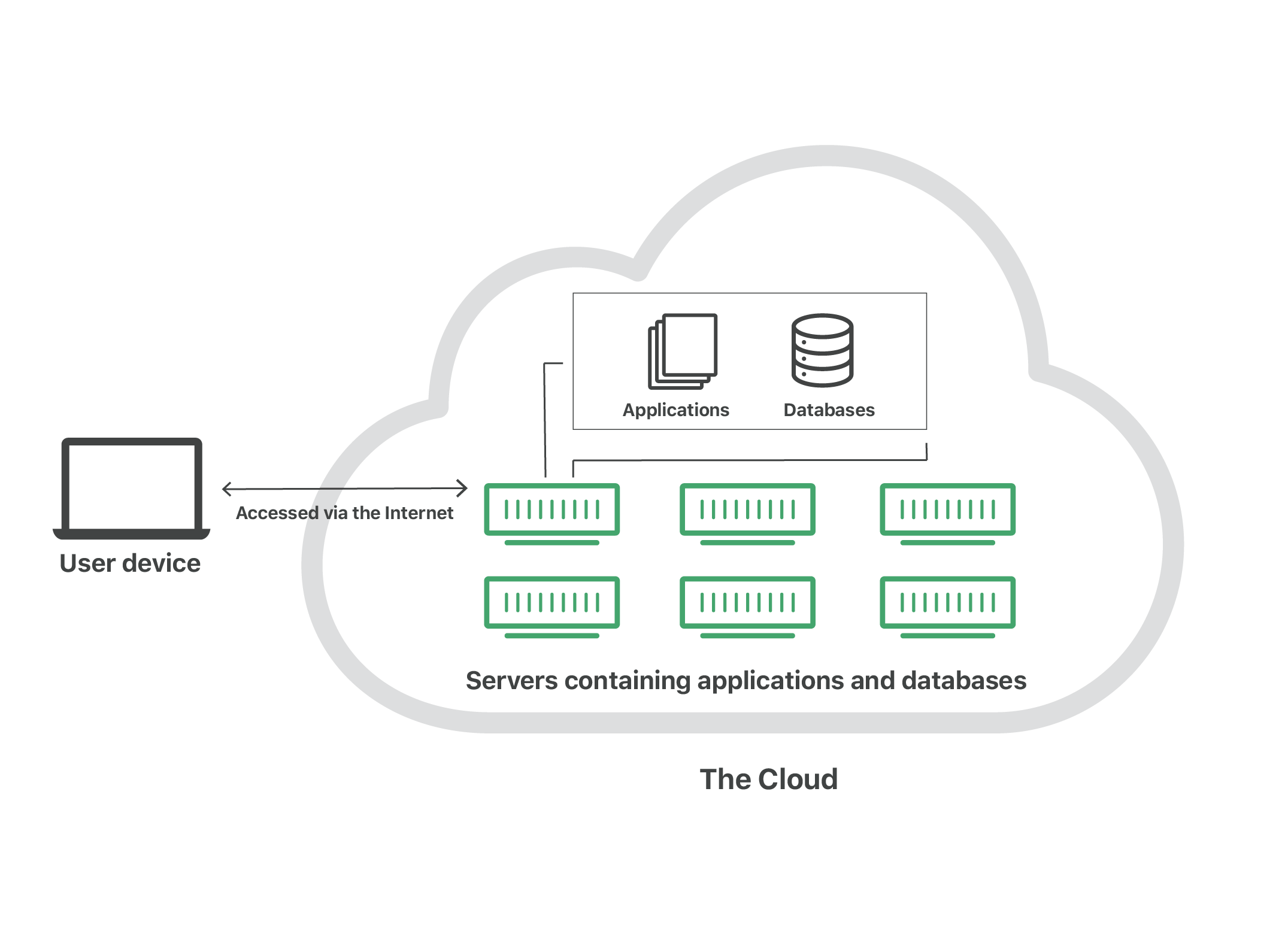
"The cloud" refers to servers that are accessed over the Internet, and the software and databases that run on those servers. Cloud servers are located in data centers all over the world. By using cloud computing, users and companies do not have to manage physical servers themselves or run software applications on their own machines.
why cloud ?
1. Cost Efficient
Moving to the cloud saves the upfront cost of purchasing, managing and upgrading the IT systems. Thus using cloud model converts capital expenditure to operational expenditure. Using one-time-payment, ‘pay as you go’ model and other customized packages, organizations can significantly lower their IT costs.
2. Storage space
Businesses will no longer require file storage, data backup and software programs which take up most of the space as most of the data would be stored in remote cloud servers. Not only cloud frees in-house space but also provides unlimited space in the cloud.
3. Fault Resilient
While using own servers, you need to buy more hardware than you need in case of failure. In extreme cases, you need to duplicate everything. Moving to cloud eliminates redundancy and susceptibility to outages. Thus migrating to cloud not only adds reliability to the systems but also keeps information highly available.
4. Scalability
Using cloud computing, businesses can easily expand existing computing resources. For start-ups and growing enterprises, being able to optimize resources from the cloud enables them to escape the large one-off payments of hardware and software, making operational costs minimal.
5. Lean Management
With cloud, businesses can perform their processes more efficiently. Cloud migration leads existing workforce to focus on their core task of monitoring the infrastructure and improving them. Thus cloud computing leads to lean management and drives profitability.
in short Cloud computing has benefited many enterprises by reducing costs and enabling a focus on one’s core business competence, rather than IT and infrastructure issues.
Top 3 cloud service providers:
AWS
A subsidiary of Amazon and founded in 2006, AWS is a leader amongst cloud service providers. It is one of the first cloud computing platforms that became widely available.
Microsoft Azure
Microsoft Azure holds a strong second place after AWS. The company provides a broad range of enterprise-focused services. Every quarter Microsoft Azure releases tens of products, services and enhancements resulting from research and development initiatives, made over multiple years. Azure offers the ability to instantly provision computing resources on-demand and is the best-in-class in the hybrid cloud among other cloud vendors.
Google Cloud
Google Cloud has third place on Gartner’s Magic Quadrant of cloud providers, after AWS and Microsoft Azure. In the last year, Google Cloud has substantially increased it’s hybrid and multi-cloud workload using Antos which allows users to manage workloads on Google, AWS and Azure. Besides, Firebase, a Google-purchased cloud mobile Backend-as-a-Service (BaaS), has grown quite rapidly and became widely adopted by developers. Firebase remains a highly-demanded BaaS platform despite it being run on the top of Google Cloud.
Disadvantages of cloud computing
Let’s take a look at the cons of cloud computing
1). Security and privacy
Although cloud service providers implement the best security standards and industry certifications, storing data and important files on external service providers always opens up risks. Any discussion involving data must address security and privacy, especially when it comes to managing sensitive data. We must not forget what happened at Code Space and the hacking of their AWS EC2 console, which led to data deletion and the eventual shutdown of the company. Their dependence on remote cloud-based infrastructure meant taking on the risks of outsourcing everything.
Of course, any cloud service provider is expected to manage and safeguard the underlying hardware infrastructure of a deployment. However, your responsibilities lie in the realm of user access management, and it’s up to you to carefully weigh all the risk scenarios.
Though recent breaches of credit card data and user login credentials are still fresh in the minds of the public, steps have been taken to ensure the safety of data. One such example is the General Data Protection Rule (GDPR), which was recently enacted in the European Union to provide users more control over their data. Nonetheless, you still need to be aware of your responsibilities and follow best practices.
3). Vulnerability to attack
In cloud computing, every component is online, which exposes potential vulnerabilities. Even the best teams suffer severe attacks and security breaches from time to time. Since cloud computing is built as a public service, it’s easy to run before you learn to walk. After all, no one at a cloud vendor checks your administration skills before granting you an account: all it takes to get started is generally a valid credit card.
so in order to make our infrastructure secure and prevent it from attackers MNC's need cloud security experts
According to some reports Application Security and Cloud Security are far and away from the fastest-growing skill areas in cybersecurity, with projected 5-year growth of 164% and 115%, respectively.
Why is cloud security important?
Cloud security is critical since most organizations are already using cloud computing in one form or another. This high rate of adoption of public cloud services is reflected in Gartner’s recent prediction that the worldwide market for public cloud services will grow 23.1% in 2021.
IT professionals remain concerned about moving more data and applications to the cloud due to security, governance, and compliance issues when their content is stored in the cloud. They worry that highly sensitive business information and intellectual property may be exposed through accidental leaks or due to increasingly sophisticated cyber threats.
A crucial component of cloud security is focused on protecting data and business content, such as customer orders, secret design documents, and financial records. Preventing leaks and data theft is critical for maintaining your customers’ trust and protecting the assets that contribute to your competitive advantage. Cloud security's ability to guard your data and assets makes it crucial to any company switching to the cloud.
That's
all for today guys in
hope you are enjoying our content and also guys Please don't forget to follow us on Instagram and GitHub and do like our content on Instagram.
https://instagram.com/__pytools__
Comments
Post a Comment